Thursday, August 22, 2013

TTTOW - A unique film festival

TTTOW or Taxi Takes on The World is a unique film festival where anyone across the world can participate. All you need is a camcorder (a smartphone will do!), a taxi ride and the ensuing conversation with the taxi driver - recorded and sent to the organizers. 


Yes, its as simple as that. But what exactly is this film festival about? 

The Taxi Takes on the World is a crowd sourced interactive documentary about conversations between drivers and passengers from inside taxis all around the globe. This user generated project aims to harness honest grassroots interactions and present the world’s ‘video takes’ on matters that affect us all. 


“Talks inside taxis are usually between people of diverse backgrounds and so offer a variety of perspectives. These ‘takes’ have the power to blur boundaries and bridge cultures. The Taxi Takes on the World will showcase crowd sourced video stories that mainstream media ignores about times when people find common ground and break stereotypes about the ‘other’. Mobile technology allows a democratization of media which aligns with my work’s vision for how new media will shape our future. This film festival will be part of a traveling film festival and offers a great opportunity to showcase citizens’ stories of brotherhood” - Vandana Sood - Giddings, Creator, Founder, Executive Director.

Date & Venues


The film festival will be held from The 21ST of September 2013 to the 2nd of October 2013 in Jammu and Kashmir, New Delhi, Punjab and Manipur. Kashmir and Manipur are both conflict states of India. 

This film festival is a partnership between The Taxi Takes on the World project and Standing Together to Enable Peace, Trust (STEP) a non-profit organization established in New Delhi in 2009.

Themes


The film festival will focus on certain broad themes:

  • Religious and ethnic conflict
  • War and terror
  • Race
  • Gender
  • Class
  • Culture

Each of these broad global topics has regional nuances that the mainstream media often overlooks. Through the prism of the taxi, where every day people from often widely disparate backgrounds meet, this film festival will tell a story about how, given the right space, we all can understand each other and speak a common language.

Where & How to

Need guidance on how to go about it? Check out this short prezi that suggests the kind of questions you can ask to begin a conversation and start your take. Find the application procedure, rules & regulations all on the TTOW submissions page.

Hurry, the submissions deadline is September 10, 2013!

Saturday, July 06, 2013

10 Free Video Editing Software for Filmmakers


Money is, by definition, 
always a difficult issue for the low budget filmmaker.  The challenge is in getting as much of your meagre budget up on the screen as possible. Luckily, by the wonders of open source development, just about every $800 software package has its freebie equivalent.

1. Lightworks

PC ( LINUX public beta released early 2013, MAC TBA)
An incredibly powerful editing package that is head and shoulders above all other freebie editing packages.  Just take a look at their website to see some of the high profile projects that have used Lightworks.  Lightworks has features that even some of the big packages don’t have without the addition of expensive plugins.  With a strong community supporting it, this is only going to get better.
Get Lightworks here

2. HyperEngine-AV – Equivalent to Adobe Premiere, Final Cut Pro

MAC/PC
A decent editing package.  A step up from the likes of imovie though still not up to the professional standards of the pricey packages.  For simple edits though, you could do a lot worse.
Get HyperEngine-AV here

3. Avidemux

MAC/PC/LINUX
One of the best free editing packages out there.  Avidemux allows you to do basic cutting, apply filters and work with a wide variety of different file types.  It gets better with each release.
Get Avidemux here

4. Windows movie maker, pinnacle videospin

PC
These lightweight freebie editors should not be overlooked entirely.  For quick edits and changes there’s no need for the big guns.
Get Windows Movie Maker
Get Pinnacle Videospin

5. Avid Free DV

MAC
This was a great idea but has sadly been discontinued by Avid.  Avid Free DV is a free version of their high end editing software, preserving the interface but removing many of the advanced features.  Great for simple editing whilst also learning your way around Avid.  Copies are still floating around online, though now it’s unsupported it is just going to get more out of date with time.  Get it while it’s still useful.
Get Avid Free DV here

6. MPEG Streamclip

MAC/PC
Another powerful, professional encoding and conversion tool.  It accepts even the most obscure video formats and can even download YouTube videos. It is widely used as a simple tool for transcoding unwieldly DSLR footage.
Get MPEG Streamclip here

7. ffmpeg

MAC/PC/LINUX
A powerful encoding tool that can read and convert just about any video file format.
Get ffmpeg here

8. DCP Builder – Equivalent to taking your project to an expensive post house

MAC/PC/LINUX
Want to screen your film at the utmost quality?  Modern digital projectors require something called a DCP (Digital Cinema Package).  Most post houses will charge you several thousands for the privilege, even for a short.  DCP Builder is free.
Get DCP Builder here

9. Open DCP

MAC/PC/LINUX
Another DCP package.  Personally I’ve had better results with this one than with DCP Builder.  But hey, they’re both free so give them both a shot and see what works best for you.
Get Open DCP here

10. Black Magic DaVinci Resolve Lite

MAC/PC/LINUX
A good colour correcting job can make your budget movie look a million dollars.  Black Magic now offer a lite version of their powerful colour correcting tool absolutely free!
Please feel free to add your own favourite free software that give an edge to the filmmaker.

Friday, January 11, 2013

Free stock footage, music from Video Blocks

Got an email yesterday about an upcoming company called Video Blocks that's offering free stock footage from their collection of over 50,000 video, motion backgrounds and production music - if you sign up for a 7-day trial.


The offer seemed really tempting so I did some research on Video Blocks and realized they were featured on TechCrunch too:


Anyhow, I still have to check them out. The 7-day trial offer is really tempting, the only catch is that they require your credit card info to complete the trial sign-up. This is so that if you forget to cancel your trial in 7 days you will be charged at their regular monthly fee of $79 per month. But this kind of marketing tactic is not new at all...many big and small retailers, including Netflix have used a similar model of internet marketing to generate leads.

In any case, if you're into video editing or post production this offer is really attractive. Even the monthly cost of $79 is quite a decent deal for the amount of stock footage and clips that Video Blocks have on offer. But if you think you're not at the stage where you can afford a recurring cost, just take up their 7-day free trial and remember to cancel before it ends!


Thursday, October 25, 2012

How Apple's new computers impact filmmaking


The new Macbook Pro and iMac announced by Apple on October 24 heralds a major shift in the way PCs will be designed and have a cumulative impact on digital filmmaking.


Below are some of the major upgrades that affect the digital filmmaking process:

1.    No Optical Drive: Both the new Macbook Pro with retina display and the new iMac have done away with the DVD drive, with Apple calling it  obsolete in the age of blazing broadband speeds when movies and television can be easily streamed online or downloaded. The new iMac does have 2 Thunderbolt ports and 4 USB 3.0 ports to allow connection of external hard drives and other devices. Seeing that Apple is usually the trendsetter in computer design, we can expect competitors like HP and Dell to follow suit. This could spell the death knell for the DVD industry, and moviemakers will now be looking to go completely digital. Of course, home theatre systems and bluray players will ensure that the home video market doesn’t completely evaporate in the near future, but the transition to a more 'online' movie watching experience is surely on its way.  

2.    Much better screen resolutions: The new iMac has a full HD display (1,920 × 1,080 pixels) for the 21.5” version and 2,560 × 1,440 pixel for the 27” version. It certainly translates into a better film/video watching experience and the computer being used for watching movies and gaming more than ever. The Macbook Pro with Retina display boats of a tantalizing 2,560 x 1,600 at 227 pixels per inch. This one has four times the screen resolution of the previous 13-inch version of the MacBook Pro.

3.    Super powerful processors: The new 21.5” iMac starts with a config of Intel Core i5 Quad Core 2.7 Ghz Processor with 8GB RAM , 1GB dedicated NVIDIA graphics and 1TB hard disk. Even the Macbook Pro with Retina display is all about performance, speed and graphics. It boasts of an Intel dual-core i5 Ivy Bridge processor clock at 2.5 Ghz (minimum) For graphics it has the Intel HD 4,000 graphics support. The RAM is 8 GB and its all-flash storage has three configurations available: 256 GB, 512 GB, or 768 GB. Such top-end configurations in the base models bode well for popular film editing applications like Final Cut Pro.  Apple will be looking to release an even more powerful version of its flagship video editing app to utilize the full potential of its new line of computer devices.

The rise of smartphones and tablets coupled with faster broadband speeds have already given a fillip to the various kinds of digital filmmaking, both in terms of production and post production.  Apple’s new line of smart computers will be prove to be another turning point, particularly because the optical drive has been dropped across its iMac and Macbook Pro ranges.

What do you think of Apple’s new devices, and their potential impact on filmmaking?

Monday, October 01, 2012

6 Frequently Used Transitions Between Shots

Film editing is all about making (mostly smooth) transitions from one shot to another. Here we briefly discuss the 6 frequently used transitions between shots:

1. CUT: The end of the first shot is attached to the beginning of the second shot. The most often used of all transitions, it creates an instantaneous change in one or more of the following: angle, distance, subject etc. In narrative films, normally only cuts are used within a scene.

2. MATCH CUT: A match cut (sometimes called a form cut) maintains continuity between two shots by matching objects with similar shapes or movements or both similar shapes and similar movements. One of the best known examples of a match cut is from 2001: A Space Odyssey (1968), in which a bone slowly tumbling end over end in the air is replaced by an orbiting spacecraft with a similar shape. Watch video below for reference:

3. JUMP CUT: A jump cut is a discontinuous transition between shots. For example, one shot shows a woman running on a beach towards the water, and the next shot shows her running away from the water. A jump cut is sometimes used to surprise or disorient viewers. It may also occur if the film print or video has missing footage. Many filmmakers and film schools associate a jump cut with bad editing.

4. FADE OUT, FADE IN: The first shot fades to darkness, (normally black); then the second shot fades in(by degree goes from darkness to illuminated image). The fade out, fade in can provide a short but meaningful pause between scenes and sequences. If this editing transition is doe slowly, it can serve as a leisurely transition.; if done rapidly, it is less noticeable or not noticeable at all. Perhaps because of the current popularity of fast pacing in films, this transition is used far less often than it used to be,

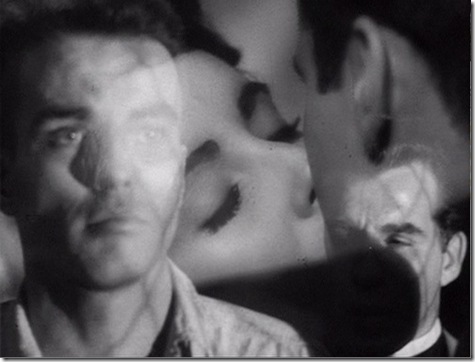
5. LAP DISSOLVE: The first shot fades out as the second shot fades in, overlaps the first, then replaces it entirely. Lap dissolves may be rapid and nearly imperceptible or slow and quite noticeable, creating a momentary superimposition of two images, sometimes suggesting similarities or even meaning.

lap dissolve

6. WIPE: A wipe seems to push one shot off the screen as it replaces it with the next shot. The wipe, which comes with many variations, has been popular in science fiction, serials and action movies. but it has also been used in such diverse films as It Happened on Night, (1934), The Maltese Falcon (1941), The Seven Samurai (1954), Ed Wood (1994) and Battlefield Earth (2000).

Many other transitions are used but much less often than these six mentioned above. We will post more on video editing techniques on the Digital Filmmaking Blog in the coming days,

Wednesday, August 08, 2012

Arri Alexa - a film style digital camcorder

The Arri Alexa is a film-style digital motion picture camera system made by Arri first introduced in April 2010. The camera marked Arri's first major transition into digital cinematography after smaller previous efforts such as the Arriflex D-20 and D-21. 

It features modularity, PL mount lenses, and a Super 35 sized CMOS sensor shooting up to 2880 x 2160 resolution.

Arri Alexa being used during the shoot of Transformers 3

Hands-on reports say the Alexa’s controls are similar to a film camera and include FPS, shutter, EI, and WB (white balance). Buttons control the functions and an LCD display shows all the camera settings at once.

Arri offers the following models in its Alexa range:

Alexa
The first camera of the Alexa product family. Introduced in April of 2010.

Alexa Plus
The ALEXA Plus adds integrated wireless remote control, the ARRI Lens Data System (LDS), additional outputs, lens synchronization for 3D, and built-in position and motion sensors.

Alexa Plus 4:3
The ALEXA Plus adds integrated wireless remote control, the ARRI Lens Data System (LDS), additional outputs, lens synchronization for 3D, and built-in position and motion sensors and a 4:3 sensor making it ideal for anamorphic cinematography.

Alexa M
The Alexa M has its imaging and processing unit broken down in two parts to be small, compact and leightweight for 3D rigs and other uses where size is a concern.

Alexa Studio
The Alexa Studio features an optical viewfinder, mechanical shutter, and a 4:3 sensor making it ideal for anamorphic cinematography.

For full features of the above cameras check out the Alexa page on the Arri website.

ARRI ALEXA VS. RED ONE

The ARRI Alexa platform is aimed squarely at the RED ONE digital camera, itself already well established in the movie industry. RED digital cameras have been used by directors such as Steven Soderbergh, and on feature movies including Angels & Demons. ARRI has designed the Alexa for shooting feature movies, television dramas, and commercials.

VIDEO COMPARISON: ARRI ALEXA VS. RED ONE MYSTERIUM-X VS. RED ONE


Popular Film and TV series shot with Arri Alexa


Popular TV series Game of Thrones was shot with the Arri Alexa

2010: Upstairs, Downstairs, Anno 1790 (TV), Rosario

2011: Final Destination 5, Extremely Loud and Incredibly Close, Hugo, Prom, Game of Thrones (TV), Melancholia, Fringe season 4 (TV), The Three Musketeers, Doctor Who (TV), Jack and Jill, How to make it in America (TV), Once Upon a Time(TV)

2012: The Avengers, Life of Pi. Bel-Ami, Abraham Lincoln: Vampire Hunter, Gravity, The Gangster Squad, Skyfall, World War Z, This is Forty, Rock of Ages, The Dictator

In Bollywood, Tigmanshu Dhulia directed Sahib, Biwi aur Gangster (2011) became the first Bollywood film to be shot on Arri Alexa.

Better than Film?
According to cinematographer Roger Deakins, the Alexa’s tonal range, color space and latitude exceed the capabilities of film. Also, in terms of speed, resolution and clarity of image, the Alexa produces a better image than film cameras. "[T]his camera has brought us to a point where digital is simply better”, says Deakins.

Sunday, June 10, 2012

Shot Lister - An iOS App for Filmmakers

Vancouver filmmaker Zach Lipovsky, who is known for his work on Steven Spielberg's reality TV series On the Lot, has launched Shot Lister - an exciting new app that can help streamline the work on a film set.


Shot Lister has recently released on the App Store and for the first week it's at half price: $9.99. (only a day or two left)

Available for both the iPhone and the iPad (check out some cool ipad cases here), Shot Lister allows a filmmaker to build, organize, schedule and share shot lists digitally. Traditionally, AD’s carry a schedule document as a hard copy or as a PDF on their device with the inability to change or modify it. If changes need to be made, a laptop with the EP software would be needed – a time consuming process when other pressing things to be dealt with on set. (If you've worked on a film set you know how high stress levels usually are).


The scheduling app allows you to create a one-liner that has all the necessary information plus the ability to manage and adjust the schedule on the fly right from your iOS device. After putting in the shoot information into the app (either on the device or by importing from free template), you can then schedule out each day.

Not only do you schedule the order in which scenes are shot, but also the specific shots in each scene. You can then add the estimated time it would take for each shot and Shot Lister will let you know if you have enough time for what is scheduled.


Shot Lister’s Unique Features:

UNIVERSAL – share Shot Lister files on any iOS device, as well as full Retina Display Support.

INDUSTRY GRADE - Easily organize and store hundreds of scenes and thousands of shots with the flick of a finger

SCHEDULING - The only software available to easily create a shooting schedule on a shot by shot and minute by minute basis.

LIVE MODE - Experience the ground breaking “Live” production mode to see exactly how you are doing to the minute, and re-organize the day in a matter of seconds.

FULLY CUSTOMIZABLE - customize and order every category to your taste and needs. Also features a 24HR time preference.

DESKTOP IMPORT - Build shot lists in Excel or Numbers using our website templates then import them directly into Shot Lister

SHARING - Export PDFs of your shot list with or without estimated times, or share the entire Shot Lister project file via email with other crew members.

MULTI-CAM SUPPORT - Assign shots to different cameras and group them together to shoot simultaneously. Supports up to 11 cameras

CALENDAR VIEW - On iPad, display your entire shooting schedule as a calendar, just like the production board in the office.

COMPATIBILITY: Universal iOS 5.0+

About Reel Apps & Zach:

Reel Apps is about filmmakers creating apps for the industry – apps that save time, decrease paperwork, increase efficiency and look good doing it.

Zach Lipovsky, the designer of Shot Lister 1.0, is an indie filmmaker who shot to fame as the youngest filmmaker and only Canadian on Mark Burnett and Steven Spielberg’s search for the best new director on the TV series, On The Lot.  Then, while directing his first movie, a horror flick for SyFy, he created a temp version of the app to use on set and with rave reviews from crew, decided to create the full iOS version.

Thursday, May 10, 2012

Uses of Digital Distortion Techniques in Filmmaking


The vast digital world we now live in opens endless doors for remixing and reimagining both visual and audio effects through digitally- altered imagery and sound. Filmmakers are increasingly turning to new technology to create digital master pieces, rather than using traditional techniques and methods. It is this new generation of experimental film-makers that is pushing new boundaries and using over-saturated colour and distorted sound to inject new life into both visual and audio landscapes.

distortion-filmmaking

Below is a selection of brilliant examples of digital distortion, shown through some of the most prominent young filmmakers using these techniques to signify their work. Also, this article looks at Hit Film, an easy-to-install programme that enables digital filmmakers to experiment with their own work.

Yoshi Sodeoka - http://www.sodeoka.com/

Yoshi Sodeoka is a visual artist and filmmaker based in the USA, and originally from Japan. He currently produces digital videos that have been manipulated, altered and enhanced to create hypnotic, hyper-saturated, abstract results. He uses primary colours, distorted into a kaleidoscope of patterns. He is currently working on a project with a musician, Daron Murphy, to develop a series of videos that have been inspired by the psychedelic rock era, combined with Greek mythology. He uses digital distortion techniques to bring his inspiration to life.

Ryan Trecartin - http://ryantrecartin.com/

Ryan Trecartin is an American artist and filmmaker from America. He makes digital movies inspired by the fast, cut throat world of internet communication. He uses techniques such as voice manipulation, over-layering graphics, adding text and editing in a frenzied, abstract manner. His films are chaotic in nature and often contain narratives. Storylines are blurred due to his purposely confusing style of editing. He uses distortion to portray the vastness and frenzy of the online world, portraying a dark and disturbing picture of the internet. He reflects his use of distortion through his films’ eccentric characters; he adds unnatural amounts of colours to each one – going overboard on hues. His sped up filming techniques require the viewer’s full attention; clashes of colour and abstract sound make following what’s going on a purposely difficult challenge.

Kenneth Tin-Kin Hung - http://www.tinkin.com/

Kenneth Tin-King Hung is a digital filmmaker who was born in Hong Kong. His speciality is remixing images and sounds of pop culture, politics and modern communications through innovative, digitally distorted filming.  He draws on digitalised graphics that play on the aesthetic of video games to portray a cynical view of modern society. He uses hyper saturation and exaggerated hues to portray satire and has since been commissioned by music producer Felix Da Housecat – an artist also known for his dark projections about society through his work.

Home software

There are now many great software packages available for those wishing to experiment with digital distortion – both visual and audio – that are compatible with most computers. One computing company producing software is is FXHome. Its programme, Hit Film, is one of the best available for adding all kinds of special effects and digital distortion techniques. Hit Film allows the user to create cutting- edge visual effects, motion tracking, colour alteration and 3D compositing. Its 3D camera has optional depth of field, and can blur layers based on their relative distance from the lens. Hit Film Ultimate’s 3D facility allows interaction of layers and particle simulations. Other facilities include fine tuning, masks, invisibility, cloning, temporal effects, lighting and shadowing effects, and green screen editing facilities. It also comes with visual additions, such as blood spray, light swords, gun fire, lightening and lens flares.

Like with all filming equipment, make sure you invest in a good contents insurance plan, as not only is the hardware pricey but once you add on the software we're talking about a sizable investment; these programmes are rather pricey – Hit Film prices start at $149 for the standard version, $399 for the Ultimate version and $647 for the studio version.

For those able to splash out on Hit Film Studio – the top level version – you can expect an easy-to-use package for beginners that also adequately fulfils the needs of advanced digital filmmakers, combining video editing, advanced compositing in 2D and 3D and visual effects. The Studio package has features to rival any professional filmmaking studio, with highlights including a vocal eraser tool, which can easily extract unwanted vocals from films including removing vocals from songs; stereoscopic 3D; video compositing; colour correction, and surround sound mixing.

Sunday, March 11, 2012

SXSW festival being streamed live

The South by Southwest multi-day gathering, also called the SXSW Festival, since it’s being livestreamed from Austin, TX, enabling viewers around the globe to feel the love even sitting in the comfort of their home. 


From March 9 - March 18, there’s a party going on, and you didn’t even need to fly there in order to attend. This event, which is popularly know by its acronym SXSW is streaming various live events, music and photos online here. Events are best viewed using Internet Explorer 9.

This year, more than 500 parties — a record — are on tap at venues around town. With its focus on music, film and interactive offerings, SXSW naturally attracts interest each year from record labels, film distributors and high-tech firms looking to make a big splash with lavish events featuring celebrities, freebies and, of course, lots of food and booze.

Overall, SXSW is known as a great creative mashup attracting filmmakers, distributors, music promoters, talent buyers, members of the national and international press, digital creatives, technology geeks, entrepreneurs, fans and fanatics. This year is the 19th time the South by Southwest film event is being held. The largest demographic represented among attendees are people in their 30’s (40%), followed by twenty-somethings (31%).

While it has a reputation for being hip, it aims to steer clear of being a stuffy, snobbish atmosphere, and based upon press testimonies , the South by Southwest gathering seems to have reached that goal in past years. And then some.

The interactive part of the festival continues for 4 more days through March 13th, while film viewing will last 8 more days through March 17th and for those who love the music events, there’s a great line up that will take folks out 9 more days, through March 18th.

A Microsoft gala last year at downtown's ACL Live venue, for example, reportedly cost $750,000. But the festival also appeals to other firms, including automakers, fashion designers, television networks and even the makers of Red Bull energy drink.

All are eager to reach the 20,000-plus trendsetters in town, hoping to generate buzz, which, in turn, generates sales.

 Visit the South by Southwest home page for a more comprehensive list of events and programs.

Sunday, February 05, 2012

Avid for iPad is here


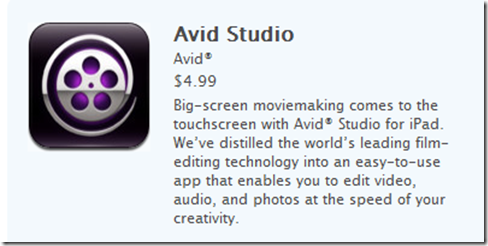
Avid has launched a new video editing iPad app, which it hopes will give Apple’s iMovie a run for its money, and is Avid’s first prosumer video editing app for the iPad.

avid-ipad

Avid Studio for the iPad enables you to quickly arrange your clips in the Storyboard, make precision edits using the Timeline, and add high-quality transitions, effects, and soundtracks to your movie footage.

Avid has created an app with the power of a professional editor, yet is easy enough for newcomers. It looks to be a big step up from Apple’s iMovie app, which is strictly for home hobbyists.

The Avid Studio app combines a storyboard and timeline interface, where users can arrange clips in the storyboard, then use the timeline for precise cuts. It also offers touch controls not found in the desktop, like the ability to resize and rotate titles with a gesture.

To get media to edit, users can capture video or photos within the app, import media from iTunes, or capture from a camera using the iPad Camera Connection Kit ($29).

More than a basic editor, the Avid app includes picture-in-picture effects, as well as multiple audio tracks for layering sounds. When they’re done, users can upload their creations directly to their YouTube or Facebook accounts, save them to their computers, or send them to their Avid Studio desktop program for further editing.

Other features include 3D animations, transitions, and titles; full title and graphic control; pan-and-zoom for photos; and full screen playback.

Get the Avid for iPad App now:

avid-for-ipad

Tuesday, January 31, 2012

Canon C300 poised to take over Hollywood?

Canon c300 video camera

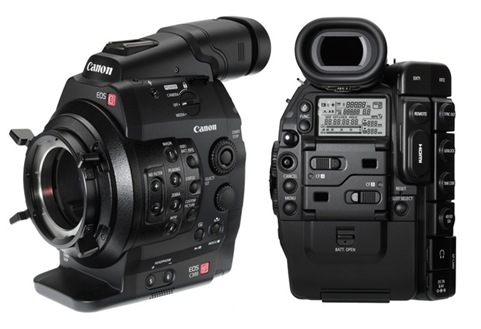
The EOS C300 – the latest Digital for Film camera from Canon – starts shipping from today. Aiming to compete directly against the Reds of the world, it carries a Super 35mm CMOS sensor capable of up to 4K resolution 1080p capture, and should be helped in large part by the company's top-shelf lenses; like the 14.5 - 60mm and 30 - 300mm. When we first learnt about C300, it was priced at a hefty $20,000. But that's no longer the case, instead it'll cost a less painful $16,000 for the body only.

Canon has always made video cameras alongside its stills cameras, and the EOS C300 is really the natural evolution of the 5DMkII.

Canon took principles of the 5D — a full-frame SLR which shoots hi-def video — and developed it into a proper movie camera. The sensor is a conservative 8.3MP, and it records 1080p video in each of the three color channels. These pixels are big, for good low-light performance, and the movies are recorded to standard CF cards.

canon c300 for tv

From there, things get very movie-techy. The C300 records in the open-source MXF (Material eXchange Format), can capture compressed MPEG2 Full HD, uses 4:2:2 color sampling and hooks up with all manner of movie accessories. In short, unless you’re a movie pro, not much of this camera will be familiar to you.
The new camera will be joined by a range of EF and PL mount lenses, and in Canon also has a 4K-capable SLR camera in the making.

Canon is counting on a wider range of offerings as digital cinema gets more serious. There’s time. The first significant all-digital movie came out a decade ago: Once Upon a Time in Mexico, where “significant” applies more to digital cinematography than to the flick. Some movies are shot with a combination of film and, for special effects, digital. Even in Hollywood, the ability to streamline production and see daily rushes without the cost and delays developing and printing film, can be an important money-saver when studios shoot all-digital.

Wednesday, November 23, 2011

George Clooney honoured at Palm Springs Film Festival

George Clooney will receive the Chairman's Award for his acting work in The Descendants and his directing of The Ides of March at the 2012 Palm Springs International Film Festival.

The award will be presented on January 7 at PSIFF's annual Awards Gala, a black-tie event that always hands out an array of awards to luminaries who figure to be in the Oscar race.

Like the awards given at the Santa Barbara International Film Festival in late January, the Palm Springs event has become a valuable stop on the Oscar campaign trail. Previous recipients of the Chairman's Award include Dustin Hoffman, Nicole Kidman and Ben Affleck.

Oscar-nominated actress Michelle Williams will also be rewarded for her portrayal of Marilyn Monroe in “My Week With Marilyn,” which is already generating Oscar buzz.

Williams, 31, will receive the Desert Palm Achievement Actress Award at the Palm Springs International Film Festival awards gala at the Palm Springs Convention Center. Previous recipients include Academy Award winners Natalie Portman, Marion Cotillard, Charlize Theron and Kate Winslet.

“My Week With Marilyn,” which opens Wednesday in limited distribution, premiered Oct. 9 at the New York International Film Festival. Directed by Simon Curtis, the film was presented Nov. 6 as part of the AFI Fest at Grauman's Chinese Theatre in Hollywood, where Monroe put her hand and footprints in cement in 1952.

The Palm Springs International Film Festival runs Jan. 5-16 2012 at various venues in Palm Springs

Sources: mydesert.com & Reuters

Technorati Tags: ,

Wednesday, August 31, 2011

How to sell your film online

Selling your film online has now became easy, although it wasn't always like this till even a couple of years back. You had websites like Revver and Turnhere, which later became redundant.


However, there is something even better now, and its completely free. The best part is that its promoted by Amazon.com, which with its vast resources has helped many self publishers of ebooks to become millionaires.
I am talking about CreateSpace.

CreateSpace provides free tools to help you self-publish and distribute your books, DVDs, CDs, video downloads and MP3s on-demand. So whether you're a filmmaker, a musician or an author, createspace is one service you should definitely try to sell your films, music and books.

Let us talk about filmmaking here. What does Createspace offer for filmmakers? Quite a bit if you ask me. For starters, here's what their DVD publishing section says:
Bring your film to market with retail-ready DVDs. We faithfully reproduce your artwork in full-color and package your discs in Amaray-style cases.
Setting up your title with us ensures your DVD remains in stock, made on-demand when customers order.

Here's some more benefits they claim:
  • Your movie becomes eligible for listing on IMDb
  • Printed with full-color, full-bleed, customizable disc and cover artwork
  • Create custom DVD menu artwork
  • Free UPC is assigned if you do not already own one
The best part is that you can sell your DVD on Amazon.com and have your eStore on it. Set the list price and start earning royalties. You can also choose Amazon Video On Demand™ as a sales channel when setting up your title to turn your film into a download. Definitely worth a try for short film makers who find it difficult to find a distribution channel.

Click here to setup a free Createspace account and start selling your film

Friday, June 24, 2011

Final Cut Pro X released

Apple has released Final Cut Pro X, the latest version of its professional video-editing software and one of the most popular programs for digital filmmaking.
Its actually been two days since FCP X was launched, and of course there’s been a strong buzz about it in the market. Video professionals were not only impressed with the new features, but with the new price too. Final Cut Pro X is available in the Mac App Store for $299.99. Compare that to 2009, when the fully loaded Final Cut Studio retailed for $999.99.

Final Cut Pro X is a big update for the powerful editing suite, in no small part because it is now (finally) built with 64-bit support. That means that the app will be able to take advantage of the additional memory space in Mac OS X Snow Leopard and the upcoming Mac OS X Lion.

Installing Final Cut Pro X
Since the only way to get Final Cut Pro X is through the Mac App Store, installation is easy: You just click "Buy" in the store, and the app's icon appears in your Finder, ready to run. You'll be able to install it on five Macs, and you receive updates automatically. The program requires at least a Core 2 Duo-based Mac running Snow Leopard, a decent video processor, 2.4GB of disk space, and 2GB RAM (4GB recommended).


The big new feature is called the Magnetic Timeline, which takes a trackless approach to editing. Like Adobe, Apple has also put a lot of effort into what it calls Content Auto-Analysis, which is another way of saying that the software uses meta-tags to better organize and import content, based on shot type, media format and other information.

Check out this video Apple released to show off the new features in Final Cut Pro X:


Friday, May 06, 2011

Shortie Awards Youth Film Festival


Hollyn Randolph just mailed me in about the forthcoming Shortie Awards film festival.

The Shortie Awards film festival will be held June 5, 2011 in Arlington, VA a suburb of Washington D.C. The Shortie Awards recognizes original short film productions created by student filmmakers, ages 7-18, and their teachers.

This year we have entries from 26 states and 14 countries and India has 36 entries which is the largest number from outside of the US.
Apparently the last date for submitting the entries was April 1, 2011. But we can look forward to the screenings and the winners. Those who live around Arlingtom and Washington DC should attend the event!

Tuesday, April 26, 2011

Short Film: Damn Your Eyes


David Guglielmo, an alumni of School of Visual Arts, New York emailed me his short film titled Damn Your Eyes.
damn your eyes

Damn Your Eyes a Spaghetti Western-influenced revenge film shot on the Sony EX1 digital camera in the NY Metropolitan area for $5,000. It has been successful at film festivals and recently won two awards.


WINNER: "Best Student Film" at Royal Flush Festival '09
WINNER: "Best More Than Horror Short" at Buffalo Screams Horror Festival '10


I liked the visual quality of the film: the lighting, the locations, set, framing, composition etc. The DoP used the Sony EXI camcorder given to him pretty well. Most of the actors did a really professional job and that took the movie experience a notch higher. The screenplay could have been written better. Some of the moments in the movie were clichéd and boring but on the whole it is a decent production. What do you think of the movie? Please watch and comment (feed subscribers will need to visit the blog to watch it).

David Guglielmo must be congratulated for doing his excellent direction. Considering he is relatively new to this profession, he has done a laudable job that commands appreciation.
 Digital filmmaking is indeed growing from strength to strength.

Wednesday, March 30, 2011

Summary of the filmmaking business


filmmaking-business

There are three main stages of the filmmaking business process: production, distribution and exhibition.

1. Production involves the following:

  • finance: a producer seeks to find investors and financial backing for a film package;
  • preproduction: includes research, planning, budgeting, hiring director and crew, casting, finding locations, scripting and storyboarding;
  • production: shooting the film;
  • postproduction: editing, sound design, sound editing and dubbing, special effects and graphics

2. Distribution: the distribution, marketing, advertising, promoting an classification of the film.

3. Exhibition: exposing the film to the audience, whether it is in a one-screen, multiplex, multi-screen or art-house cinema; also includes reviewing and criticism.

Wednesday, March 23, 2011

Tribeca Film Festival Launches Online Version

I had recently blogged about Tribeca Film Festival's announcement of filmmaking grants for funding documentaries of social significance. Well now it has gone a step further further launched an online version of the increasingly popular movie fest.

According to Hollywood Reporter, the 2011 Tribeca Film Festival, which kicks off from April 20 and ends on May 1 in New York city, will have a new online component where audiences will be able to watch live streams of events and interact with other audience members.

Online audiences will also be allowed to submit questions to a host of festival executives and other notable guests and access detailed information on all of the online fest filmmakers. There will also be a Future of Film blog that will include posts from film and technology experts.

If you want to know about the screenings at Tribeca 2011, check out the Tribeca Film Festival 2011 film guide .

Monday, January 10, 2011

Salon Films launches filmmaker training program

Salon Films will launch a cross-border training program for young Singapore and Hong Kong filmmakers, and a funding initiative in connection with the Hong Kong government subsidy for filmmakers.

The training program is organized with the Media Development Authority of Singapore to bring budding Singaporean filmmakers to work in Hong Kong and China.

The program began in Hong Kong, in partnership with the Academy of Film of the Hong Kong Baptist University, and continues in Beijing, Shanghai, Suzhou, in cooperation with the China Film Foundation and CCTV, and will conclude in the Hengdian studio, lasting three weeks in each city.

The film crew is shooting a documentary to commemorate the 20th anniversary the establishment of economic relations between China and Singapore.

"Asian culture shares common origins," Wang said, "The training program is aimed at providing an opportunity for young filmmakers across Asia to meet, exchange ideas, and make films that speak to our mutual cultural roots."

To capitalize on the current prevalence of Hong Kong-Chinese co-productions and the growing film industry in China, the program also intends for young filmmakers and film students to obtain hands-on practical experience in China.

Film students at the Academy of Film of the Baptist University will also join the Salon team in Beijing and Hengdian.

Tuesday, October 12, 2010

Recording Audio for a Feature Film

Here are a few tips for recording audio for movies using a directional mic:

Where to point the microphone
  • Imagine that the microphone is a flashlight, with a beam projecting straight out from it.
  • Aim the imaginary beam directly at the mouth of the person who is speaking (not at their chest, not at their forehead).
  • If the mic is close to the actor you may need to adjust the angle slightly. For example, if you’re getting plosives or sybilants, adjust it upward or downward slightly... such as, angling up slightly past the mouth (toward the philtrum) or toward the chin. (If possible, aim it from in front of the actor, from above or below his or her mouth. So the mic will be pointing at the actor’s mouth, but he or she won’t be speaking directly into it. If you come in too much from the side, or miss the mouth, it may sound okay to you, but be missing some frequencies and sound tinny in the movie. If the actor is speaking directly into it, or is too close to the microphone, some consonant sounds like “s” and “p” phonetics may be distorted.)
Generally speaking, the microphone should be held as close to the actor as possible without being visible in the frame. It’s also important that the mic’s SHADOW not be in frame.

If you hear anything other than crystal clear audio during a take, let the director know. (That means, buzzing or hissing, vehicles going by, footsteps or creaking sounds when the actors are speaking, distant voices in the house, etc.) The mic picks them all up, at much higher sensitivity than the human ear, and they can make a shot unusable.

If you hear any buzzing, let the director know about it. Usually buzzing is caused by electrical interference. Make sure that if the if the microphone’s cable is near any cord with current running through it, that it crosses it at a 90 degree angle, rather than lying along side it.

Have fun making movies! The attention you pay to audio will make a big difference in the quality of your finished movie.


Nils Osmar is a Filmmaking Instructor who has worked as a fine and commercial artist, book and magazine illustrator, portraitist and cartoonist. His artwork has been published in the United States and Europe, and featured in several national magazines. In addition to his work as a visual artist, Nils has been active in Seattle's theater scene as an actor, director and playwright.